TejakulaRead the place. Find your way.
A village-by-village almanac
for the north coast of Bali.
BALI / TEJAKULA / CHAPTER 07

Les.

Water, salt,
living memory.

Between the hills and the sea, a village comes into view through the things its people know.

↓ Follow the four threads
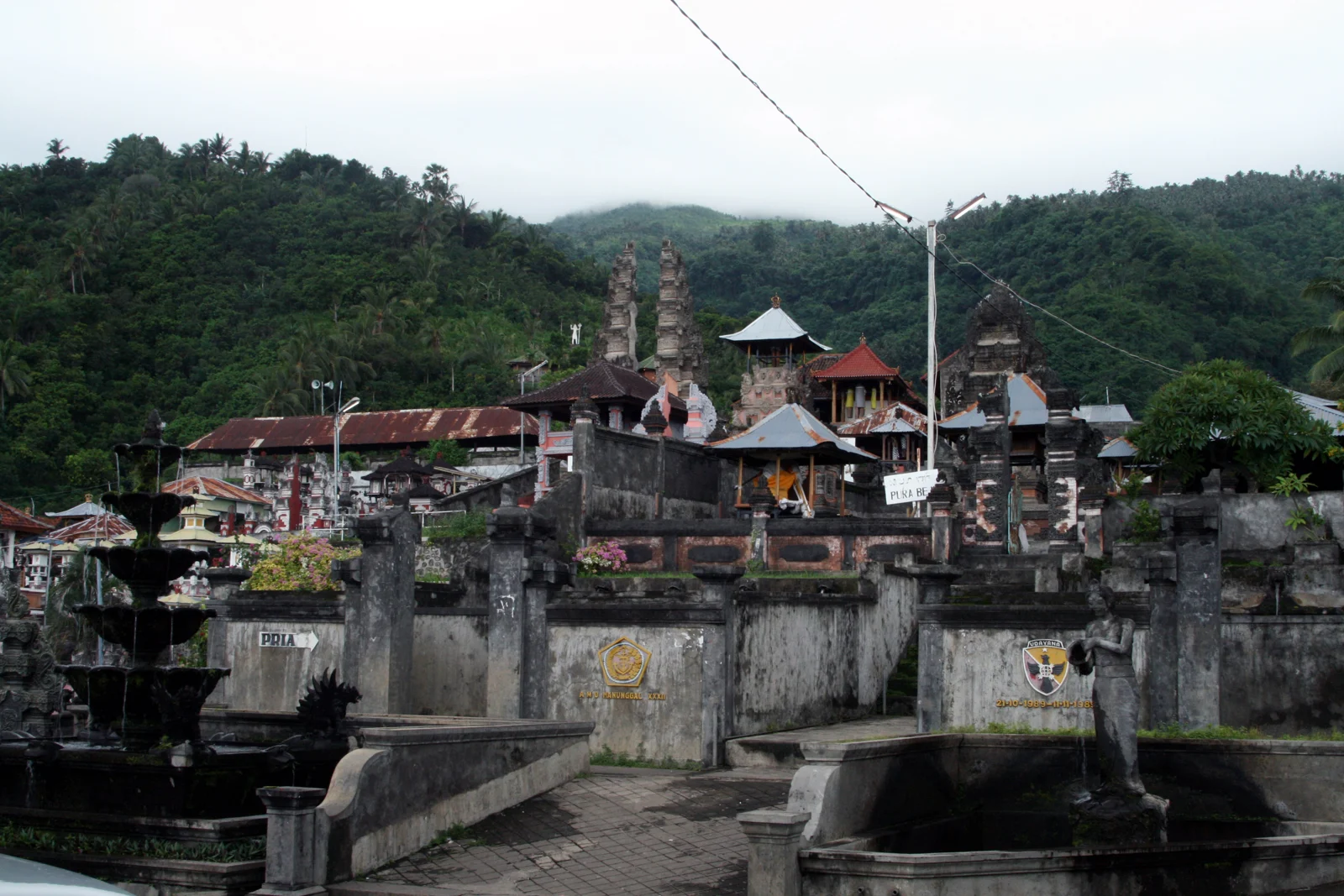
Temple buildings below green hills in Les, photographed in 2007
FROM THE LES ARCHIVE ronnie.muhadi · 24 March 2007 · CC BY-SA 3.0 ↗
A place to
pay attention.
VILLAGE ALMANAC × FIELD ATLASRead a story. Hear a voice. Find your way.
A NOTE BEFORE YOU ENTER

There is more than
one way into a place.

The waterfall is one beginning. So is a row of salt-making troughs, a kitchen shaped by the day’s ingredients, or a fishing family’s relationship with the reef. Follow the thread that catches your attention. The others are close by.

An independent, source-led chapter. Archival images are dated; accounts belong to their named authors. This edition is an invitation to learn, not a claim that we have visited every place.

THE FIELD ATLAS / ORIENT YOURSELF

One village.
Four ways in.

Find Les on the north coast.
Choose a lens to begin your chapter.

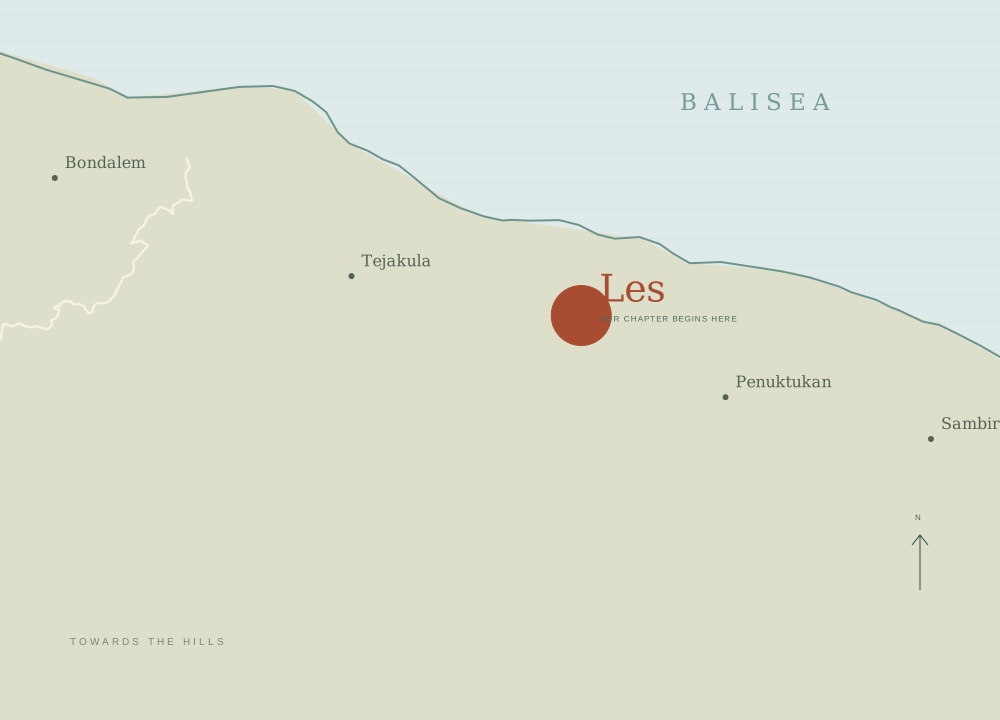
Map locating Les between Tejakula and Penuktukan on the north coast of BaliFIELD ATLAS / LES & ITS NEIGHBOURS
Geographic context · not a walking or dive route

Map: © OpenStreetMap contributors, ODbL; Bali outline via geoBoundaries gbOpen. Data retrieved 30 October 2026. Village points indicate localities, not entrances. Explore the source map ↗

01 / WATERLandscape & visiting context

Before the coast,
the falling water.

Yeh Mampeh gives this chapter its first change of pace: away from the coast and towards the hills.

The national tourism-village directory places the waterfall in Les and describes an approach with a local guide. Its listing also includes a holy spring. These are places with their own conditions and customs; the right introduction matters.

Let the first question be a practical one: who can guide us today, and what should we know before we come?

Read the village tourism listing ↗
BEFORE YOU GO

Confirm access, weather, meeting point and any rules around sacred water or photography with the local team.
Yeh MampehA STUDY IN FALLING WATER
Original editorial illustration · not a documentary image. See Rob Millenaar’s waterfall photograph ↗
02 / SALTWork, craft & change

What the sea leaves.
What the hands know.

NaCl
SEA / SUN / CRAFT
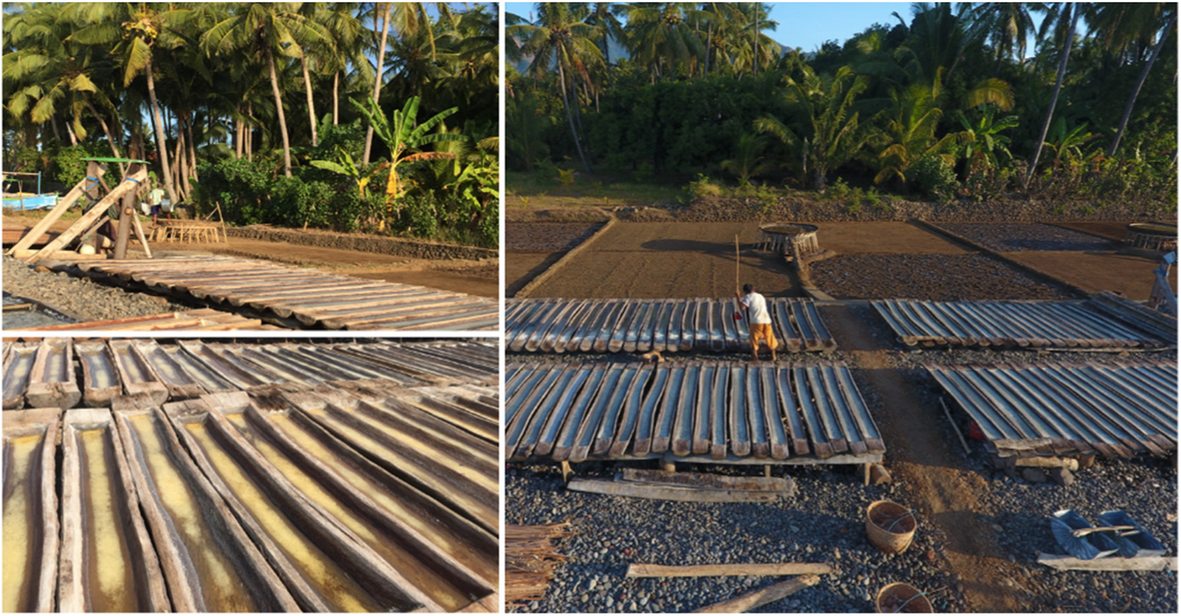
Research photograph showing wooden palung salt evaporation troughs and a coastal salt-making site in Bali
Palung salt-making in Bali · Rochwulaningsih et al., 2019, figure 1 · CC BY 4.0 ↗. Regional context; this figure’s exact village is not established.

The trough is only part of the story. So are the materials, the weather and the knowledge passed between people.

A 2019 historical study places Tejakula within Bali’s palung salt-making tradition. In a published June 2023 interview, Les salt-farmers’ leader I Nyoman Madiasa describes inherited skills alongside changes in equipment.

His account gives us a better question than “is it ancient?”: what has stayed, what has changed, and what does it take to keep making salt here?

Read Madiasa’s published interview · Indonesian ↗
01

Gather

Seawater and the work of preparing the ground.

02

Filter

Local materials and carefully handled brine.

03

Wait

Evaporation, sun and the uncertainty of weather.

04

Harvest

A craft carried into a changing village economy.

A simplified reading of the regional process, not a claim that every Les producer uses the same method today.

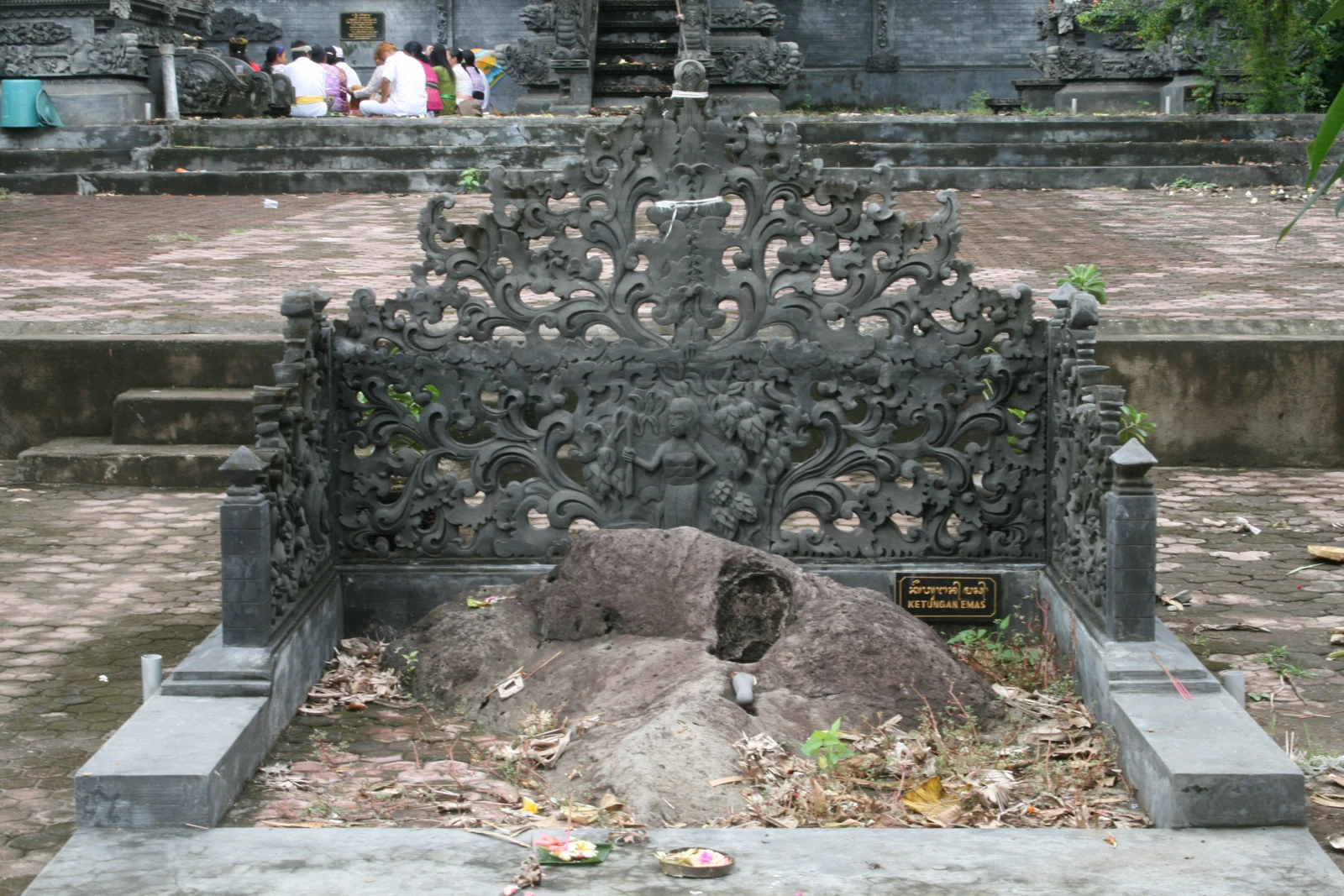
A temple detail in Les from the 2007 photographic archive
Les temple detail · ronnie.muhadi · 24 March 2007 · CC BY-SA 3.0 ↗
THE ARCHIVE IS A BEGINNING.

It holds a moment.
The village keeps living.

03 / PEOPLELocal voices, food & memory

A place has
more than one voice.

The most revealing way into Les may be to listen.

In June and July 2025, participants at Dinacon recorded conversations and sounds with people in Les. The resulting Learning from Les episode credits village leader Jro Pasek, local divers, Sea Communities contributors and the Bajra Suara Girilestari Desa Les rindik group.

These are existing recordings by their credited makers—not interviews commissioned by this guide. Follow them in their original setting.

↗ Listen to Learning from Les
ANOTHER WAY IN / THE TABLE

What arrived today?

Chef Yudi’s account of Dapur Bali Mula connects the kitchen to local produce and fishermen’s catches. It is a way of reading the village through what becomes a meal.

Read the reported conversation · RRI, 2023 ↗
04 / REEFLivelihoods & the sea

The coast continues
underwater.

And its story belongs to the people whose lives are connected to it.

FIELD PLATE 04 / CONNECTIONS BELOW THE SURFACEOriginal editorial illustration · not a reef survey

LINI traces its work with Les fishers to 2008. Its account follows the Mina Lestari group through conservation, collective organisation and, later, dive and snorkelling activities.

A separate 2024 account introduces Nengah Arsana and his son Gara: a fishing family describing how their working practices changed through their relationship with LINI.

The story is larger than a beautiful reef photograph. It includes knowledge, livelihoods and the work of looking after a shared place.

Meet Nengah and Gara in the original account ↗
2008LINI dates the beginning of its work with Les fishers.
2012LINI records the formal establishment of the Mina Lestari group.
2025New field accounts document conservation work and community voices.
Read LINI’s history and its dates ↗

Interested in seeing the reef? Start with the responsible local team. Conditions, suitability and access need a current conversation.

THE LISTENING & VIEWING ROOM

Stay a little longer.

Stories already being told.
Open them where their makers published them.

A PHOTOGRAPHER’S LENS / 2025

Look closer. A whole world lives here.

Low Liong Leong’s Les field account pairs marine-life photographs with the daily work of reef monitoring.

Open the photo essay ↗
FROM THE LES DIRECTORY

Turn a story into
a considered visit.

YOUR LES FIELD NOTES · 0 SAVED

Take a question
with you.

A good visit begins before the journey. Keep a few questions for the people who know the place. Notes stay on this browser; nothing is sent.

Open your Tejakula trip plan → · Explore the places directory →

Sources, photograph credits & what remains to verify +

Photographs we can publish

Les village and temple photographs: ronnie.muhadi, village and temple detail, captured 24 March 2007. CC BY-SA 3.0. Resized/re-encoded as WebP; displayed with layout crops. Adapted photographs remain under that licence. They do not show present-day conditions.

Palung research image: Rochwulaningsih et al., Traditional knowledge system in palung salt-making in Bali Island, 2019, figure 1. CC BY 4.0. Original composite retained; resized by the browser. The figure’s exact village is not specified here; it illustrates the wider Balinese practice, not a verified Les site.

Water and coral plates: original House Infinite editorial illustrations, not documentary imagery. No unlicensed waterfall, kitchen or reef photograph has been republished. Recordings and films are external links; no media has been copied, remixed or represented as a partnership.

Reading shelf

About this edition

This is a source-led editorial edition. Current access should be checked with the local source. No first-hand interviews, partner permissions, book or film connections beyond these sources are claimed. Contemporary photographs remain linked to their original publishers where reuse permission has not been established. Do not treat the map as navigation or dive-access guidance.